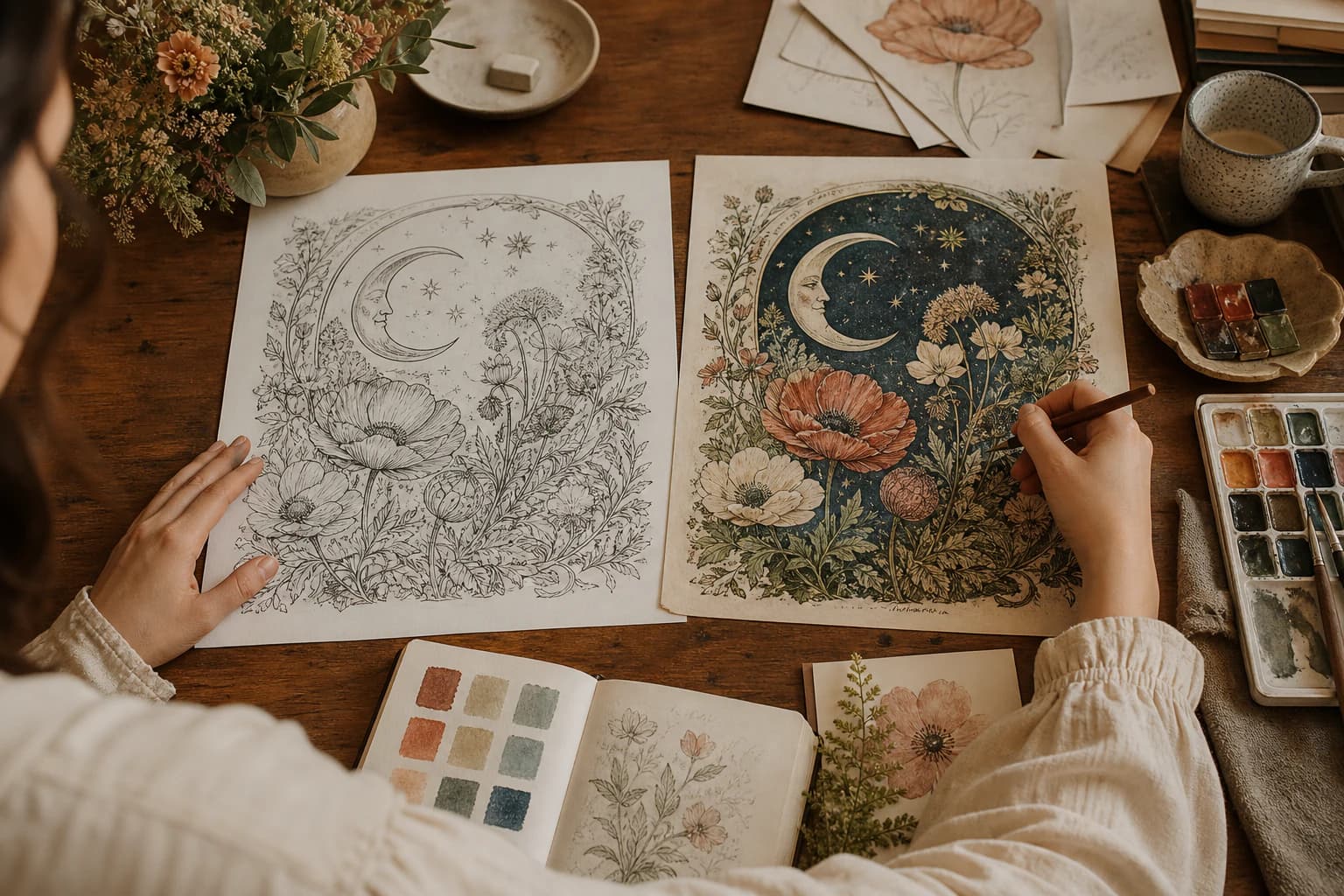
AI image tools are often framed around speed: write a sentence, receive a finished picture, move on. That can be useful, but it skips the part of art that changes the viewer—the long look, the comparison, and the decisions that make an image meaningful to you.
Tintelier is built around a slower use of generation. The model creates black-and-white line art. You decide how the image feels through color, material, emphasis, and time.
Generation can begin a conversation with an image
A theme and prompt let you explore a visual idea before you know exactly how to draw it. You might ask for an Art Nouveau greenhouse, a Japanese-inspired fantasy traveler, or a geometric garden. The result is not a final verdict. It is a page to inspect.
Where does your eye go first? Which shapes repeat? Is the composition calm or crowded? What should recede, and what deserves the strongest color? Those are art questions. Coloring makes them practical.
Coloring turns looking into decision-making
When you color a line drawing, you notice structure that a quick glance misses. A leaf overlaps a stem. A shadow shape echoes a cloud. A cluster needs contrast to separate from its background. Each choice teaches you something about value, rhythm, balance, and color relationships.
- Use a limited palette to notice value and contrast.
- Color repeated forms differently to change the rhythm of a pattern.
- Try pencil, charcoal, or watercolor fills to see how texture changes mood.
- Keep the untouched original and make another copy for a completely different interpretation.
The final artwork still comes from your choices
Tintelier preserves the generated original and creates a new copy whenever you color it. That makes experimentation safe. A warm palette can turn the same scene nostalgic; cool greys can make it quiet; a small bright accent can reorganize the whole composition.
The useful role of AI here is breadth. It can offer more subjects and structures to work with. Appreciation grows in what happens next: the time you spend noticing, deciding, revising, and understanding why one version feels different from another.
From personal study to something you can share
You can keep a page for yourself, print it, or arrange original artworks into a book. Credits include commercial usage rights for generated artwork under Tintelier’s terms, so a page can also become part of a product, workshop, or creative project. The strongest results still come from adding your own direction and judgment rather than treating the first generation as the end.